SaaS SEO is the practice of growing a software company’s organic traffic and pipeline by ranking for the searches your buyers make before, during, and after they evaluate a product. In 2026 it is less about publishing high-volume blog posts and more about owning the bottom-of-funnel pages — comparisons, alternatives, integrations, and pricing — that turn into trials and demos. The companies winning at SaaS SEO build for intent and revenue, not raw traffic.
That shift is not a trend. It is a structural change in how search works, and most SaaS marketing teams are still running the 2021 playbook into a 2026 wall.
Why SaaS SEO broke in 2025
For a decade the SaaS content model was simple: publish hundreds of “what is” and “how to” articles, rank for high-volume informational keywords, capture traffic at the top of the funnel, and nurture it down. That model is now actively losing money for most teams.
The numbers are blunt. Zero-click searches account for 58.5% of all Google searches in the US, meaning the majority of queries never send a click to anyone. AI Overviews appear on roughly 55% of all SERPs as of early 2026, and when one is present, organic click-through drops by 34–58% depending on the query. The result: 73% of B2B websites lost significant organic traffic between 2024 and 2025, with an average decline of around 34% year over year.
Here is the part teams miss. That decline is concentrated almost entirely in top-of-funnel content. The “what is a CRM” article that used to pull 40,000 visits a month is exactly the kind of query AI Overviews now answer in place. Meanwhile, commercial pages — pricing, comparisons, integrations — still get clicked, because people comparing tools want to reach the actual product, not a generated summary.
So SaaS SEO did not die. The cheap, high-volume half of it did. The half that drives revenue is healthier than ever.
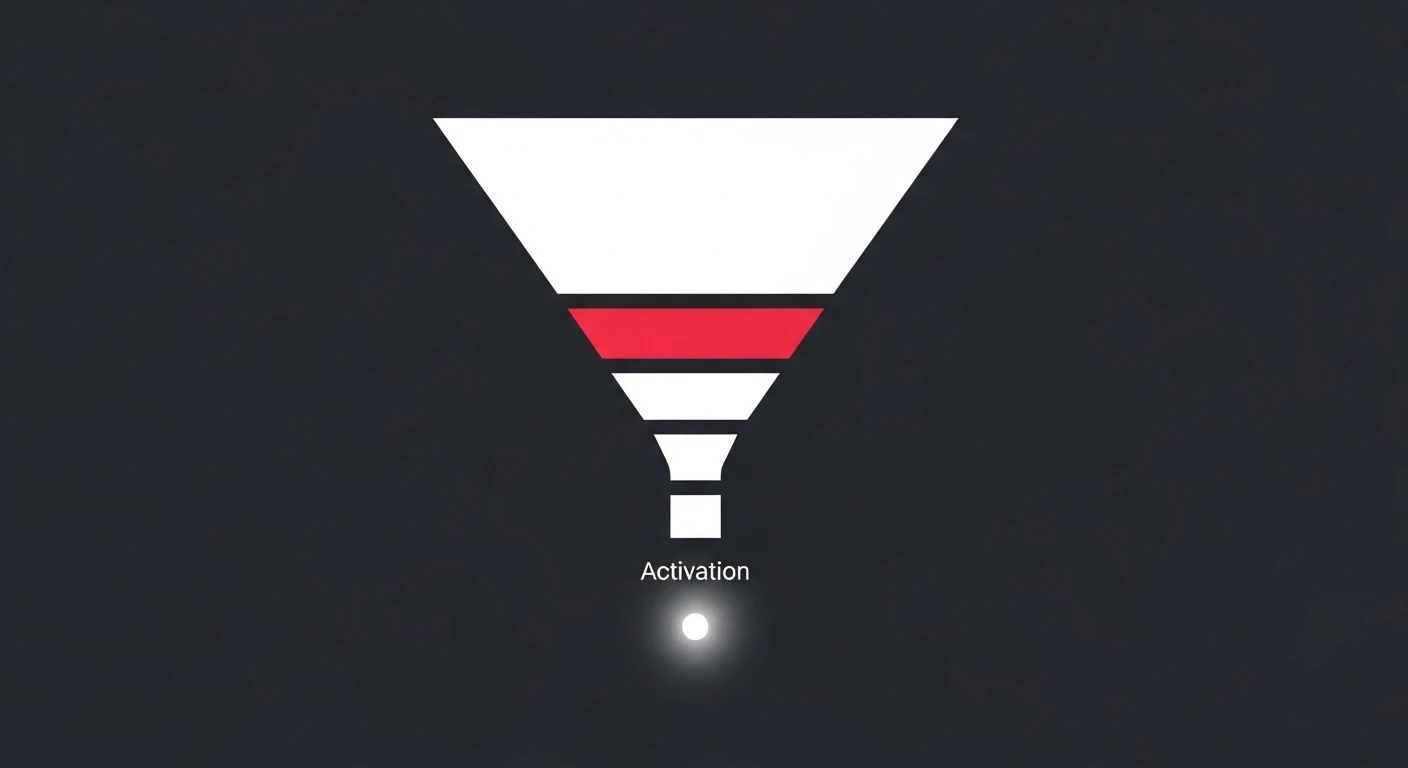
Build bottom-of-funnel first
The single biggest correction I make on SaaS engagements is sequencing. Teams start at the top of the funnel because the keywords have big volume numbers, and they save the “boring” commercial pages for later. Reverse it. Build the bottom first.
Across the SaaS projects I have audited, the pattern is consistent: a handful of bottom-of-funnel pages quietly drive more qualified pipeline than an entire blog of informational posts. They rank fast because the volume is low and competition is thin, and they convert because the searcher already has intent to buy. The same sequencing logic underpins any effective B2B SEO strategy, SaaS or not.
The four BOFU page types that convert
- Comparison pages — “[Your product] vs [Competitor]”. Someone searching this is mid-evaluation. Own the page or your competitor will write it for you.
- Alternative pages — “[Competitor] alternatives”. These capture buyers actively looking to switch. High intent, often under-served.
- Integration pages — “[Your product] + [Tool] integration”. Each integration your product supports is a keyword and a landing page. Most SaaS companies have dozens and publish none of them.
- Use-case and pricing pages — “[Category] software for [industry]” and your own pricing page. Pricing pages in particular get strong AI referral traffic because they answer a concrete buying question.
This is your map. Before writing a single top-of-funnel article, inventory every comparison, alternative, integration, and use case your product supports, and build those pages. It is the highest-ROI work in content SEO for software companies, and almost nobody does it first.
Map keywords to intent, not volume
SaaS keyword research in 2026 is an intent-sorting exercise, not a volume-ranking one. A keyword with 90 searches a month and pure buying intent is worth more than one with 9,000 searches and none. This is the mental model shift that separates programs that generate demos from programs that generate vanity dashboards.
A simple intent-tiering framework
Run every candidate keyword through three tiers before you decide to target it:
- Tier 1 — Demand capture. The searcher is comparing or ready to buy: “[product] vs”, “[competitor] alternative”, “best [category] software”, “[category] pricing”. Build these first, always.
- Tier 2 — Problem-aware. The searcher has the problem your product solves and is looking for a way to solve it: “how to [job your product does]”, “[workflow] template”, “[task] automation”. Build product-led pages here.
- Tier 3 — Topic authority. Broad educational queries that build relevance and earn links but rarely convert directly: “what is [category]”. Build these last, sparingly, and expect AI Overviews to eat most of the clicks.
Most teams invert this and spend 80% of their budget on Tier 3. Flip the ratio. Spend the budget where the buyers are.
| Tier | Searcher intent | Example keywords | Time to rank | Revenue impact |
|---|---|---|---|---|
| Tier 1 — Demand capture | Comparing or ready to buy | ”[Product] vs [Competitor]”, “best [category] pricing” | 2–4 months | Direct — buyer-ready traffic |
| Tier 2 — Problem-aware | Has the problem, seeking a solution | ”how to [workflow]”, “[task] automation” | 3–6 months | High — converts at mid-funnel |
| Tier 3 — Topic authority | Broad education | ”what is [category]”, “[concept] explained” | 6–12 months | Indirect — AI Overviews absorb most clicks |
Product-led SEO: turn features into pages
Product-led SEO is the discipline of building pages around what your product actually does, so the page both ranks and demonstrates value in the same scroll. Instead of a generic article that mentions your product in the conclusion, the searcher lands on a page where the product is the answer.
The mechanics are straightforward:
- Every integration becomes a page. Every use case becomes a page. Every template or free tool becomes a page.
- Free tools are the strongest play — a free calculator, generator, or checker that solves a small problem, ranks for a high-intent query, and puts your product one click away.
- Interactive and video elements matter more in 2026, because search results increasingly surface video for how-to and walkthrough queries, and AI engines frequently cite pages that demonstrate rather than describe.
This is where engineering and SEO have to work together, which is exactly why it gets neglected — it needs more than a content writer. It is also why it works. Pages that require product input are hard for competitors to copy.
Technical foundations SaaS sites still get wrong
You cannot out-content a broken architecture. SaaS sites have a few recurring technical failures that quietly cap organic growth, and they show up in nearly every SEO audit I run.
- JavaScript rendering — if your marketing pages render content client-side and Googlebot or an AI crawler sees an empty shell, you do not rank. Server-render or pre-render anything you want indexed.
- Programmatic page quality — integration and use-case pages generated from a template are powerful, but thin, near-duplicate versions get filtered. Each needs genuinely unique value, not a find-and-replace.
- Indexation bloat — app subdomains, staging environments, and faceted filters leaking into the index waste crawl budget and dilute authority. Keep the index clean.
- Crawler access for AI engines — explicitly allow the bots that matter in
robots.txtand ship clean, server-rendered HTML, because AI engines quote what they can read.
If any of this sounds unfamiliar for your stack, it is worth a focused technical SEO review before you invest in content that crawlers cannot see. Google’s own Search Central documentation on JavaScript SEO is the right starting point for diagnosing rendering issues.
Earn links to your money pages
Authority still decides who wins competitive commercial keywords. Two SaaS companies can publish near-identical comparison pages; the one with more relevant referring domains pointing at the domain — and ideally at the page itself — ranks. This is where most product-led programs stall, because engineers and content writers do not do outreach.
The plays that work for SaaS are specific. Integration partners will link to your integration page if you ask — it is in their interest too. Industry roundups, podcast appearances, and original data studies earn the editorial links that move authority. And your free tools, if they are genuinely useful, attract links passively, which is half the reason they are worth building.
You do not need thousands of links. You need relevant ones pointed at the pages that make money. If link acquisition is the gap in your program, it is worth treating link building as its own workstream rather than hoping content earns links on its own.
Measure pipeline, not sessions
The final correction is measurement. If your SaaS SEO dashboard leads with sessions and keyword rankings, you are measuring the wrong things and you will optimise for the wrong work. Connect organic to the funnel from day one.
The metrics that matter: organic-sourced trials and demos, pipeline influenced by organic, and conversion rate by page type. When you measure this way, the bottom-of-funnel priority becomes obvious in the data, not just in theory.
It is worth knowing where the high-intent traffic is going, too. Referrals from AI engines like ChatGPT convert dramatically better than classic Google organic — some analyses put it at 5–15x — because the searcher arrives pre-qualified by the AI’s recommendation. That is a strong argument for making sure your commercial pages are the ones AI engines cite — the GEO playbook covers exactly how. Ahrefs’ research on AI search is a useful ongoing reference for how this traffic behaves.
A 90-day SaaS SEO sequence
If you are starting or resetting a program, run it in this order:
- Weeks 1–2: Technical audit. Fix rendering, indexation bloat, and crawler access so nothing you build is wasted.
- Weeks 3–6: Build Tier 1 demand-capture pages — comparisons, alternatives, pricing. Wire up conversion tracking by page type.
- Weeks 7–10: Build Tier 2 product-led pages — top integrations, use cases, one free tool.
- Weeks 11–12: Layer in selective Tier 3 authority content and start internal linking everything together.
That sequence front-loads revenue and back-loads the work AI Overviews are most likely to undercut.
This is the version of SaaS SEO I wish more software teams ran: less volume, more intent, revenue measured from the first week. Do that, and organic stops being a traffic line on a dashboard and becomes the demand-capture engine it is supposed to be. If you are an early-stage company that has not yet built this out, the startup SEO guide covers the priorities for the first phase before you reach the full programme. If you want a senior pair of hands on it, that is exactly the kind of work I do as a freelance SEO consultant.
Frequently Asked Questions
How long does SaaS SEO take to show results?
Bottom-of-funnel pages — comparisons, alternatives, integrations — can rank and convert within 2–4 months because the search volume is low and the intent is high. Top-of-funnel content compounds over 6–12 months. If someone promises pipeline in week one, they are selling ads, not SEO.
Is SaaS SEO still worth it with AI Overviews taking traffic?
Yes, but the value moved. AI Overviews cut clicks on informational queries, so volume-based blogging is dying. Commercial pages — pricing, comparisons, integrations — still get clicked and still convert, and AI engines increasingly cite them. Build where the intent and the money are.
Should a SaaS company hire an agency or a freelance SEO consultant?
It depends on stage. Early and mid-market SaaS usually gets more from a senior freelance consultant who sets strategy and works directly with the product and content teams, rather than an agency layering account managers between you and the work. Agencies make sense once you need a large content production engine.
What is product-led SEO?
Product-led SEO is building pages around what your product actually does — use cases, integrations, templates, and free tools — so the page both ranks and demonstrates value. Instead of a generic blog post, the searcher lands on something that shows the product solving their exact problem.