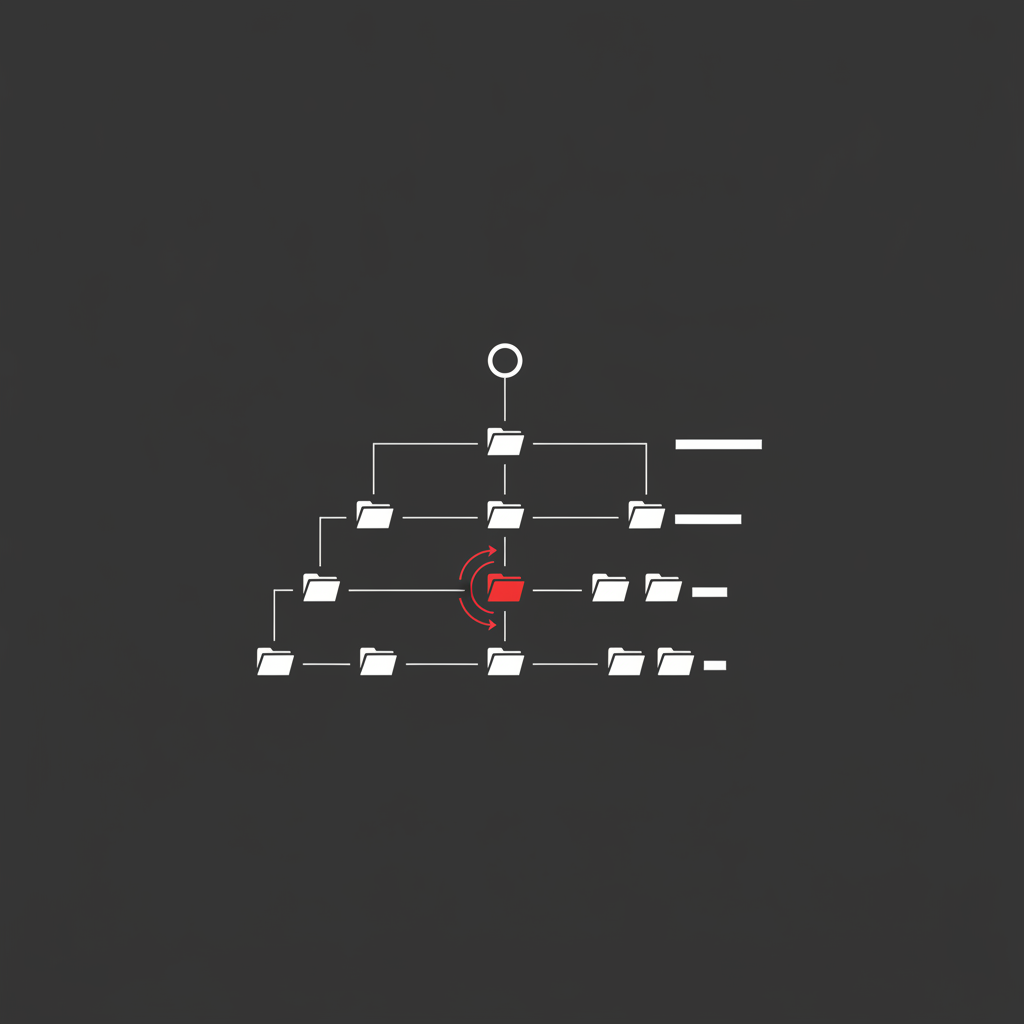
An SEO audit report is a diagnostic document that identifies what is limiting a website’s organic performance and ranks those findings by business impact so they can be fixed in order. Unlike an automated site scan, which lists every technical deviation a crawler can detect, a real SEO audit report makes judgement calls — it decides what to ignore.
That distinction is where most of the money in this market is lost. According to SEOProfy’s 2026 benchmarking, a complete SEO audit takes 25 to 40 days for a large site — because the analysis is manual. WebFX and SEOptimer both put professional audit pricing between $300 and $2,500 in 2026, depending on site complexity. Ahrefs’ own audit guidance, written by Patrick Stox, tells auditors to spend 80% of their time on the 20% of issues that matter. A crawler takes four minutes and finds four thousand issues. You are not paying for the crawl.
If you have just received an audit and you are not sure whether it was worth the invoice, this is how to tell.
What an SEO Audit Report Actually Is
A crawler produces an inventory. An audit produces a decision.
That is the whole difference, and it is why page count is a terrible proxy for quality. In my experience auditing sites across the Spanish and UK mid-market, the correlation between the length of a report and its usefulness is negative. The 90-page PDFs are almost always Screaming Frog exports with a title page and some stock photography. The reports that changed something were rarely more than fifteen pages of actual argument.
The reason is structural. Comprehensiveness is cheap — a tool does it. Prioritisation is expensive, because it requires someone to understand your business model well enough to know that your faceted navigation problem costs you more than your Core Web Vitals problem, or the reverse. Nobody can automate that, so the market quietly substitutes volume for judgement and hopes you will not notice.
A useful SEO audit report answers four questions in order:
- What is wrong?
- Which of those things is actually costing money?
- What does fixing each one require, and from whom?
- In what order should they be done?
Most reports answer question one thoroughly and the other three not at all. That is the failure mode.
The Five Sections Every SEO Audit Report Should Contain
There is no universal template, but there is a structure that consistently works because it matches how decisions actually get made inside a company.
1. Executive summary. One page, no jargon. The top five to ten findings, each stated as a business consequence rather than a technical condition. “Roughly 40% of product pages are excluded from the index, which removes them from all organic demand capture” — not “40% of URLs return noindex.”
2. Prioritised findings. The core of the document. Each finding needs four attributes: the problem, the evidence, the estimated impact, and the effort to fix. Without effort estimates, prioritisation is fiction, because a high-impact finding that takes six months of engineering time may deserve to sit behind three medium-impact fixes that take a day each.
3. Evidence. Screenshots, crawl excerpts, Search Console exports, log samples. Every claim in the findings section should be traceable to something. Findings without evidence are opinions, and your dev team will treat them accordingly.
4. The action plan. The findings re-sorted into a sequence, with owners assigned. This is the section that determines whether anything happens. A finding assigned to “the team” is assigned to nobody.
5. Appendices. Full crawl data, keyword sets, competitor snapshots. Present so the work can be verified, deliberately kept out of the body.
If your report has sections one through five, it is a professional SEO audit. If it has section three and a lot of it, you bought a crawl.
How to Judge an SEO Audit Report in 20 Minutes
You do not need to be technical to assess an audit report. You need to check whether decisions were made. Here is the review process I give clients who ask me to look at work another supplier delivered.
Step 1 — Read only the executive summary. If you cannot explain the top three problems to a colleague after reading it once, the report failed at its primary job. Stop here and go back to the supplier.
Step 2 — Count the findings. Between 10 and 25 prioritised findings is a healthy range for most sites. Under 8 suggests a shallow review. Over 50 means nothing was prioritised, and you have been handed the sorting job you paid someone else to do.
Step 3 — Check the ordering logic. Read the findings in order and ask why number one is above number two. If the sequence follows crawl-tool categories — all the meta tag issues, then all the redirect issues, then all the speed issues — no prioritisation happened. Real ordering jumps between categories, because business impact does not respect tool taxonomy.
Step 4 — Look for effort estimates. Every finding should carry a rough cost in developer or writer time. Their absence is the single most reliable indicator of a templated deliverable.
Step 5 — Look for named owners. Dev, content, product, analytics. If nothing is assigned, nothing will ship.
Step 6 — Find one finding and verify it yourself. Pick a specific claim, open the page, and check it. This takes five minutes and catches copy-paste audits immediately. I have seen reports referencing hreflang problems on sites that publish in one language.
Step 7 — Ask what was deliberately excluded. A good auditor can tell you what they looked at and decided not to raise, and why. An auditor who found everything worth mentioning did not make choices.
Score it honestly. If a report fails steps three, four, and five, you did not buy an audit — and you should say so before paying the balance.
What an SEO Audit Report Should Cost and How Long It Should Take
Pricing in this market is wide because the word “audit” covers everything from a 90-second automated scan to six weeks of manual analysis.
For 2026, the useful benchmarks are these. WebFX and SEOptimer put professional audits between $300 and $2,500, with small business sites clustering in the $300 to $1,500 band. Spanish market rates run roughly €500 to €3,000 overall, with €800 to €1,500 typical for a corporate site of 50 to 200 pages. Enterprise and international sites with multiple domains, languages, or a complex technical SEO footprint sit above that, and legitimately so.
On timelines: SEOProfy’s 2026 data puts a complete audit at 25 to 40 days for large sites. A small site can be done properly in about a week. A mid-market site is typically two to four weeks including kickoff, crawl, manual review, report writing, and a hand-off call.
Two rules follow from this. First, anything under about €500 is automated output — which is not fraud, it just is not analysis, and you should price it accordingly. Second, be suspicious of speed. A comprehensive audit delivered in 48 hours had no manual review stage, because there was no time for one. If you want to sanity-check what a given budget should buy, my SEO pricing page sets out what sits in each band.
Three Red Flags in an SEO Audit Report
These are the patterns I see most often when clients send me a deliverable they are unhappy with.
Red flag 1: a score out of 100. Site health scores are tool marketing. They aggregate unrelated signals into one number that maps to nothing, and they encourage teams to chase the score rather than the revenue. No auditor working from first principles leads with one. If the headline of your report is “your SEO score is 62,” a tool wrote the headline.
Red flag 2: findings that could apply to any website. “Improve page speed.” “Add more internal links.” “Create more quality content.” These are true of essentially every site on the internet, which makes them worthless as findings. Specificity is the deliverable: which pages, how much, measured against what.
Red flag 3: no mention of what is working. An audit that finds only problems has not modelled your site, it has scanned it. Knowing which pages carry your authority and which templates already perform matters, because the fastest wins usually come from extending something that works rather than repairing something that does not.
A fourth, softer signal: if the report never mentions AI search surfaces at all, it is running a pre-2025 checklist. Whether or not your content is citable by AI assistants is now part of the diagnostic picture, and a current audit should at least state a position on it.
What to Do With the Report Once You Have It
The uncomfortable statistic in this business is not how many audits are bad. It is how many good audits are never implemented.
The failure is almost always the same: the report is delivered as a PDF, it gets emailed round, everyone agrees it is useful, and it is never converted into tickets. A document is not a plan. Before the engagement closes, do three things.
Convert every finding into a ticket in whatever system your team actually uses, with the effort estimate attached. Assign each ticket to a person, not a department. And schedule a re-check at 90 days that measures the specific metrics the audit said would move — not overall traffic, which is too noisy to attribute.
Then hold the line on sequence. The most common way a well-prioritised audit gets wasted is that the easy items get done first because they are easy, and the top three findings — which are usually the ones requiring engineering time — quietly slip to next quarter forever. If you need help translating findings into a delivery sequence your team will accept, that handover is exactly what ongoing SEO consulting is for.
Google’s own Search Central documentation is unusually blunt about this: the fundamentals matter more than the exotica, and most sites fail on the fundamentals. A good audit tells you which fundamental you are failing. Beyond that, the deeper technical checks in my technical SEO checklist cover the diagnostic layer, and the enterprise audit guide covers what changes at scale.
Judge an SEO audit report by what it decided, not by what it found. If it hands you twelve things in the right order, with owners and effort attached, it was worth the money — even if it is eleven pages long. If it hands you four thousand findings and a score out of 100, you paid consultancy rates for a crawl you could have run yourself.
Frequently Asked Questions
What should an SEO audit report include?
An SEO audit report should include an executive summary, a prioritised findings list, evidence for each finding, an owner and effort estimate per item, and a sequenced action plan. The prioritised list is the part that matters — anything that only inventories problems without ranking them by business impact is a crawl export, not an audit. Appendices with full crawl data are fine, but they belong at the back, not in the body.
How much does an SEO audit cost?
A professional SEO audit typically costs between $300 and $1,500 for a small business site, rising to $2,500 or more for complex sites, according to 2026 pricing surveys from WebFX and SEOptimer. In the Spanish market the equivalent range runs roughly €500 to €3,000, with €800 to €1,500 typical for a 50 to 200 page corporate site. Below about €500 you are almost always buying automated tool output with a cover page.
How long does an SEO audit take?
A full SEO audit generally takes two to six weeks from kickoff to hand-off, with SEOProfy’s 2026 benchmark putting complete audits at 25 to 40 days for larger sites. A 10 to 15 page site can be audited properly in about a week. If someone promises a comprehensive audit in 48 hours, they are running a crawler and exporting the result.
What is the difference between an SEO audit and an SEO report?
An SEO audit is a one-off diagnostic that finds and prioritises problems; an SEO report is recurring measurement of performance over time. The audit answers what is wrong and what to fix first. The monthly report answers whether the fixes worked. Buying a monthly report when what you needed was an audit is one of the most common and expensive mix-ups in SEO procurement.
Are free SEO audit tools worth using?
Free SEO audit tools are useful for surfacing obvious technical errors, and worthless for prioritisation. Tools like Google Search Console and the free tier of Screaming Frog will reliably tell you about broken links, missing tags, and indexing problems. What no tool does is judge which of those findings actually affects revenue on your specific site, which is the entire value of a paid audit.