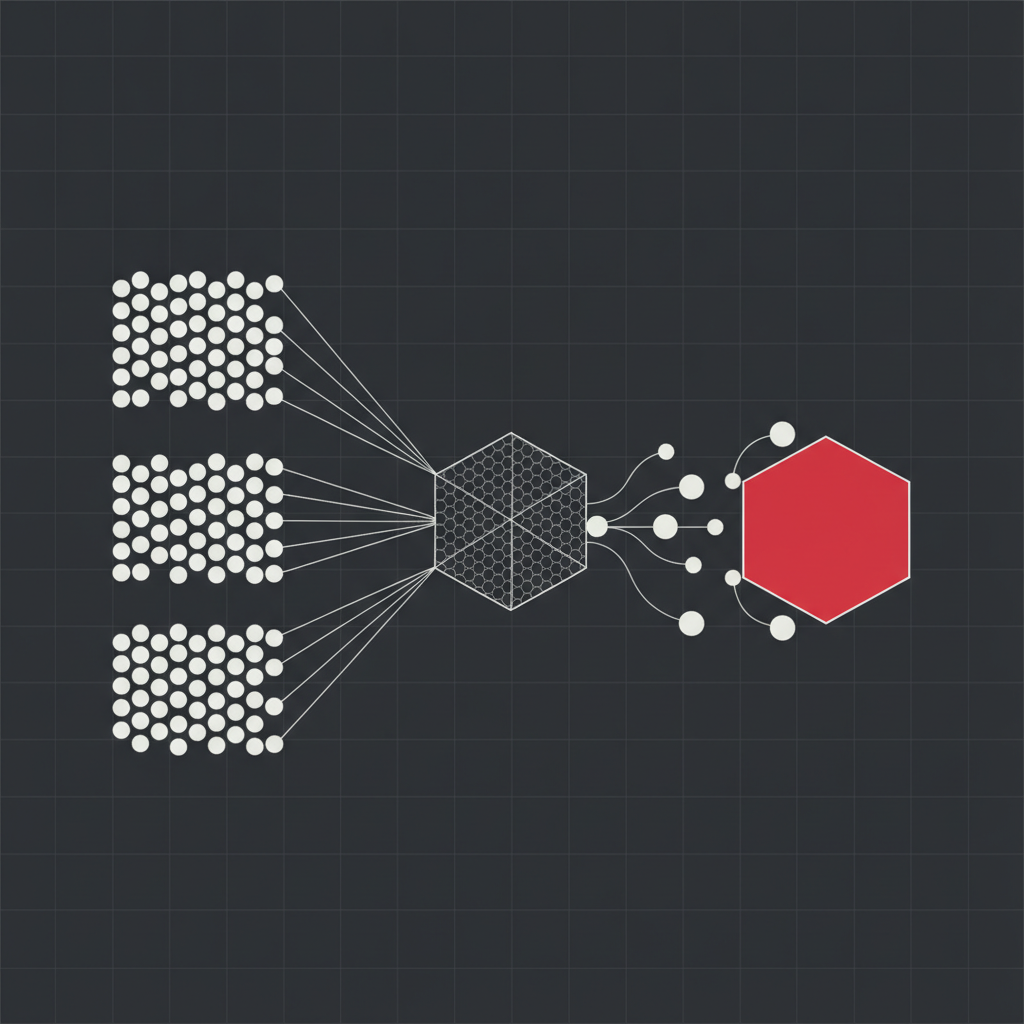
A backlink audit is the process of reviewing every site that links to yours, judging the quality and relevance of those links, and deciding what — if anything — to do about the bad ones. In 2026 the goal is rarely to disavow at scale. It is to understand your link profile, catch genuine risks like manual actions or self-built spam, and confirm that your authority is coming from places Google actually trusts.
Most backlink audits I see are done backwards. Someone runs a tool, sorts by “toxicity score”, exports a few hundred domains, and dumps them into a disavow file. That is not an audit. That is guessing with extra steps — and it can strip authority off a site that was perfectly healthy.
This is the process I use, and where the modern risk actually sits.
What a Backlink Audit Actually Checks
A backlink audit answers three questions in order:
- Where is my authority coming from? Which referring domains and pages pass the trust that holds up your rankings.
- Is there anything here that could trigger a penalty? Manual actions and deliberately manipulative patterns — not random spam.
- Is my link profile growing in a healthy way? Velocity, anchor text distribution, and relevance over time.
Notice that removing “toxic” links is not on that list as a default action. It is a conditional one. The single biggest mistake in backlink auditing is treating disavow as the point of the exercise rather than the rare exception.
Links still matter — a lot. Ahrefs’ study of over a billion pages found that 66.31% of pages have zero backlinks, and the vast majority of those get no organic traffic at all. Your job in an audit is to protect the links that are working, not to nuke your profile out of fear.
Why Toxic Backlinks Matter Less Than You Think
Here is the part most 2026 audit guides get wrong. They talk about toxic backlinks as if it is still 2013 and a wave of spammy links will tank your site overnight. That model is out of date.
Google’s Penguin algorithm went real-time and granular with Penguin 4.0 back in 2016. Instead of penalising a whole site for bad links, Google’s systems now mostly devalue individual spammy links — they simply do not count. Google’s own guidance on the disavow tool is blunt: most sites should not use it, because Google is already good at ignoring low-quality links automatically.
So when does a toxic backlink actually create risk? Two situations:
- You received a manual action. In Search Console, under Security & Manual Actions, Google explicitly tells you it found unnatural links. This is real and needs cleanup plus a reconsideration request.
- You (or a previous agency) built a manipulative profile. Bought links, PBNs, mass exact-match anchor campaigns. If you know the links were manipulative and self-created, disavowing is defensible.
For everyone else — an organically grown site that happens to attract scraper links and directory junk — the correct action is usually nothing. Across the projects I’ve worked on, the sites that damaged themselves with backlinks almost always did it with an over-aggressive disavow file, not with the spam itself.
How to Run a Backlink Audit: Step by Step
Here is the process. Work through it in order — the diagnosis matters more than the tooling, and one backlink index is all you need for it (here is how the rest of the link building tool stack breaks down).
1. Pull your full backlink profile
Export referring domains and backlinks from Google Search Console first — it is Google’s own view of your links, and it is free. Then supplement with Ahrefs or Semrush for depth, anchor text, and metrics GSC does not show. Deduplicate to a single list of referring domains; domain-level is the right unit of analysis, not individual URLs.
2. Segment by where authority comes from
Sort referring domains by whatever authority metric your tool provides (DR, Authority Score) and by relevance to your niche. You are building a mental map: the top slice is your real authority, the long tail is mostly noise. This is also where you spot opportunities — strong sites linking to weak pages are internal-linking and optimisation wins.
3. Analyse anchor text distribution
A healthy profile is dominated by branded and naked-URL anchors, with a minority of partial-match and generic anchors. A profile stuffed with exact-match commercial anchors (“buy cheap X online”) that you never earned is the clearest footprint of a manipulative campaign. Anchor text distribution tells you more about risk than any single spam score — the ratios that hold up in healthy profiles are worth benchmarking against before you flag anything.
4. Flag genuine risk patterns, not tool scores
Review flagged domains manually. A backlink deserves scrutiny — not automatic disavow — when it shows several of these together:
- Exact-match commercial anchor text you did not earn
- Referring page is deindexed or not in Google’s index
- Site is in an unrelated niche or foreign language with no audience overlap
- Page has hundreds of outbound links (link directory or farm)
- Known PBN or link-network footprint
- Content is auto-generated, scraped, or spun
One flag is noise. Several together, on a link you or an agency clearly engineered, is a pattern.
5. Decide: ignore, remove, or disavow
For the overwhelming majority of flagged links, the answer is ignore — Google already discounts them. If you have a manual action, attempt removal first (contact the site, request takedown) and document it. Disavow only what you cannot remove and that is genuinely manipulative. Use domain-level entries (domain:spammysite.com) for bulk spam, and keep the file lean.
6. Monitor going forward
Set up alerts for new referring domains and re-check anchor text quarterly. A backlink audit is not a one-off; it is a maintenance habit. Sudden spikes in low-quality links can signal a negative SEO attempt or, more often, a scraper picking up your content.
Reading Your Link Profile Like a Consultant
The metrics are easy to pull. Interpreting them is where experience shows. A few things I look at that tools do not score for you:
Relevance beats authority. A DR 40 link from a site in your exact niche is worth more than a DR 80 link from an unrelated news aggregator. Google weights topical relevance heavily, and so should your audit.
Velocity should match your activity. If you did no outreach and suddenly gained 300 referring domains in a week, something is off — either a viral moment or spam. Context decides which. Front-loaded velocity is also the tell that a retainer is sourcing from a marketplace, one of the checks in my link building packages buyer’s guide.
Compare against the SERP, not an absolute. The only backlink profile that matters is one measured against the pages currently ranking for your targets. If the top five results all have 200+ relevant referring domains and you have 20, your problem is not toxic links — it is that you need more good ones. That is a link building problem, not an audit problem.
If your rankings have already dropped and you are trying to work out whether links are the cause, a structured SEO audit will separate a link issue from the far more common technical or content causes. In my experience auditing sites after a traffic drop, links are the culprit in a small minority of cases — most Google traffic drops trace back to content or a core update, not a spammy backlink.
The Disavow Decision, Made Simple
Because this is where people do real damage, here is the decision as a simple flow:
- Manual action for unnatural links? → Remove what you can, disavow the rest, file a reconsideration request.
- You knowingly built manipulative links? → Disavow the ones you built. Clean the footprint.
- Neither of the above? → Do nothing. Let Google’s systems ignore the junk.
That is the whole framework. If you cannot point to a manual action or a manipulative campaign you can identify, the disavow tool is not for you. Getting this wrong — disavowing legitimate editorial links because a tool called them “toxic” — is one of the fastest ways to lose authority you spent years earning.
When link risk is real, it is worth handling with someone who has cleaned up manual actions before. That is the kind of work I take on in SEO consulting engagements, and getting the disavow file wrong is expensive to undo.
Backlink Audit Checklist
Use this as your working checklist:
- Export referring domains from Search Console + one third-party tool
- Deduplicate to domain level
- Segment by authority and relevance
- Review anchor text distribution for exact-match spikes
- Manually review flagged domains (never trust scores blindly)
- Check Search Console for any manual actions
- Decide per link: ignore / remove / disavow
- Attempt removal before disavow
- Keep the disavow file lean and domain-level
- Set up monitoring for new referring domains
Run this once or twice a year, plus immediately after any unexplained ranking change, and your link profile stays clean without you ever over-reacting.
A backlink audit in 2026 is less about hunting toxic backlinks and more about knowing your own link profile well enough to tell real risk from background noise. Protect the links that earn your rankings, act only when there is a genuine manual action or self-built spam, and treat the disavow tool as the scalpel of last resort it was always meant to be.
Frequently Asked Questions
Can a competitor hurt me with toxic backlinks (negative SEO)?
Almost never in practice. Google’s link spam systems are specifically built to ignore links a site did not create, precisely so that a competitor cannot point spam at you to cause harm. If you see a flood of new spammy links you did not build, the correct response is usually to leave them — Google discounts them automatically. Only escalate to disavow if you also receive a manual action.
How long does it take to recover after disavowing bad links?
If you disavowed to resolve a manual action, recovery depends on the reconsideration request being accepted and Google re-crawling the links — typically a few weeks to a couple of months. If there was no manual action, disavowing usually produces no ranking change at all, because Google was already ignoring those links. No change is the normal, expected outcome.
What tools do I need for a backlink audit?
Google Search Console is the essential, free starting point — it is Google’s own view of your links. For depth, anchor text distribution, and referring-domain metrics, add Ahrefs or Semrush. Tools speed up the data pull, but the judgment — deciding what is genuinely risky — is manual. Do not let a “toxic score” column make the decision for you.
Does the disavow tool help with AI search and LLM citations?
No. Disavowing links is a defensive Google-specific action; it does nothing to improve how AI search engines cite you. Visibility in AI answers is driven by authority, clarity, and being the trusted source on a topic — which is built by earning good links and strong content, not by cleaning up spam. Focus your energy on the profile you are building, not the junk you are removing.